Supporting Moms & Helping Littles thrive
Feed Your Baby With Confidence
If you’ve ever left the pediatrician’s office thinking, “Okay…but what do I actually feed my baby and how do I do it safely?” — you’re not alone. MOST moms feel overwhelmed and unsure when it’s time to start solids.
I’m Cassie, a Speech-Language Pathologist, infant feeding expert, and mom. I help moms cut through the noise, avoid unsafe advice online, and finally feel confident feeding their babies.

You Can Have A Happy Little Eater
select your child's age to start

0-6 Months
This is the time to be helping your child develop their motor skills to get the ready for that first bite. Be patient. They should only be drinking milk or formula at this point, but they will be ready for food before you know it.

6-8 Months
It's go time baby! After getting the okay from your child's pediatrician and ensuring they meet all prerequisites for eating, they are ready for their first bite of food!

8-18 Months
Go baby go! They are off to the races trying new foods and progressing through textures safely.

Toddler
Just like the Hungry Caterpillar, your little one is munching and crunching their way through many foods now! This is when the infamous picky eating may show up, but don't fear. For many toddlers, this is a passing phase. There are many things you can do to support their palate.

Kids
By now, your kiddo can eat just about anything. Continue supporting them by offering a variety of healthy foods and model a healthy relationship with food.

Hello there!
I'm Cassie.
I'm a Speech-Language Pathologist, Feeding, Speech, & Language Expert, and a mom of two, so I know first-hand how important mealtimes are for your entire family.
I created My Happy Littles to cut through the noise and give parents simple evidence-based steps to feeding their little ones. Let's help set your child up for a life-long healthy relationship with food from the first bite-together.
my blog
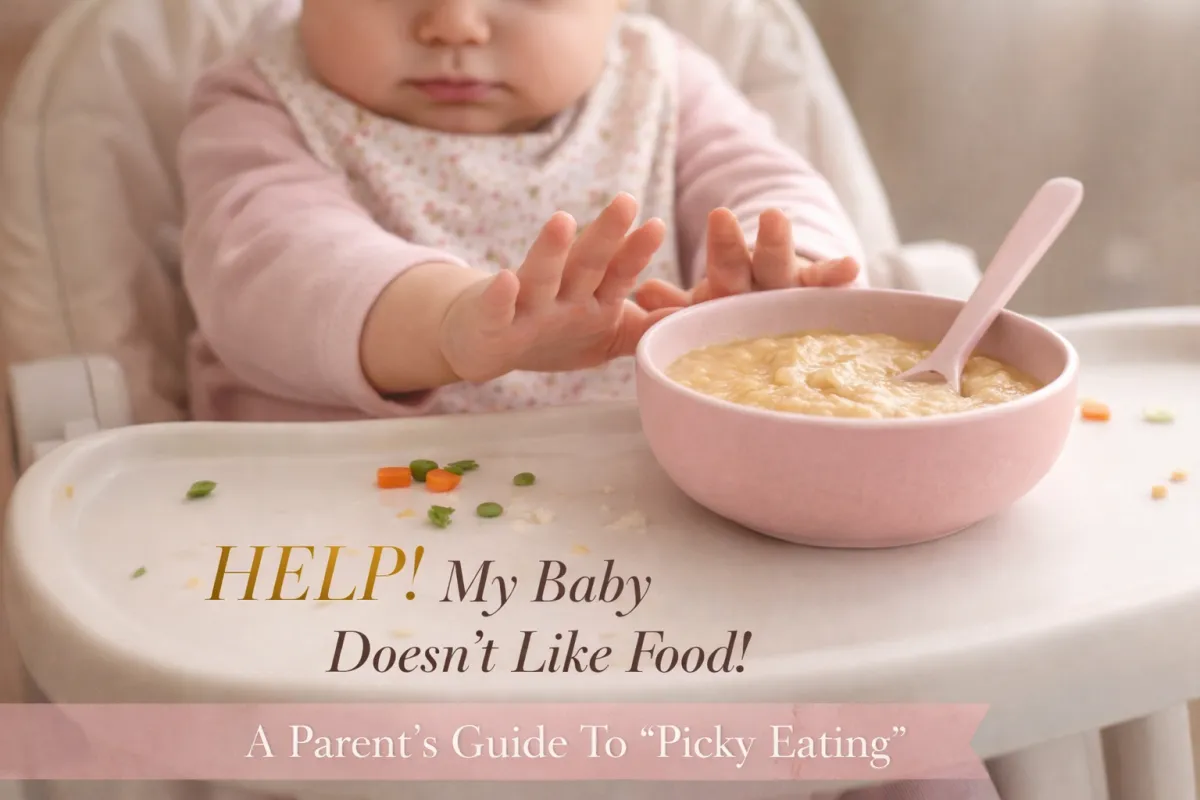
Help! My Baby Doesn't Like Food
My Happy Blog from Speech & Feeding Coach Cassie with My Happy Littles
HELP! My Baby Doesn't Like Food! A Parent's Guide To "Picky Eating"
A little while back, I was chatting with a new friend of mine. She confided in me that her sweet baby seems to turn up their adorable little nose at every spoonful of food. If that sounds familiar, you’re definitely not alone!
You’re Not the Only One With a Picky Baby
Many parents hit this stage where they feel a bit worried or frustrated. You’ve got a baby who loves milk or formula, but now that you're introducing solids, it’s like hitting a little wall. They might spit things out, push the spoon away, or just plain refuse to open their mouth. And that can feel super daunting, especially when you’re worried about whether they're getting enough nutrition.
Why Some Babies Are Reluctant Eaters
There are lots of reasons this can happen. Sometimes it’s just a matter of getting used to new textures and tastes. Other times, it might be teething or just a phase of asserting a little independence. We’ll walk through some gentle strategies you can try, and hopefully make mealtime a bit more pleasant for both you and your little one.
Simple Tips to Encourage Your Baby to Eat
Keep It Low Pressure:Offer the food and let your baby explore it. If they’re not interested, that’s okay. Sometimes a no-pressure approach helps them get curious over time. You can even try offering it outside of the kitchen. While helping them maintain a 90-degree sitting position, try offering a couple choices seated in the living room on a towel or outside on the porch.
Let Them Play With Textures:Babies learn by touching and squishing food. It might get messy, but letting them play can make them more willing to taste. Don't be afraid to jump in to explore and taste with your fingers as well. While learning through play, it IS okay to play with your food!
Try Different Flavors Gradually:Start with simple tastes and slowly introduce new flavors. If one thing doesn’t go over well, you can always try again in a week or two. Also vary the temperature (in a safe manner). Apple sauce warmed up is different than fresh out of the fridge or right out of the room-temperature pantry.
Eat Together:Babies often mimic what they see. If they see you enjoying a bit of the same food, they might be more tempted to give it a try.
FINALLY....
Balancing Milk and Solids: A Gentle Reminder
Sometimes, when babies are still getting a lot of milk—whether it’s breastfeeding on demand or frequent bottles—they might just not have much room left to be interested in food. And that’s perfectly normal! Every baby is different, and some might need a little more time to make that transition.
When you know they are hungry, start by offering some food options on their high-chair tray BEFORE you offer a boob or bottle once or twice a day. (Do this before they enter the "hangry zone".) Keep that up for the same meals/around the same times for a few days in a row. Offer a variety of options and see what interests them. If they gag on something, blend it up or offer a puree option instead. They will obviously not need purees forever - just until their mouth masters this brand new skill of chewing, moving the food to the back of the mouth, swallowing successfully, and maintaining a safe breathing pattern all at the same time! Who knew eating had so many steps?
Also, it goes without saying, but ALWAYS have a chat with your pediatrician or healthcare provider if you have any concerns about your baby. They can help you figure out a feeding routine that works for both of you.
It’s all about balance, and there’s no one-size-fits-all approach. As a fellow nursing mom, I totally get how this can be a delicate topic. The key is just to be mindful and know that it’s okay to ask for guidance if you need it.
Know that you and your little one have got this!
Cheers To Your Happy Eater,
Cassie 🤍

Feeding Coach
Cassie


